
COMMUNITY WELLNESS IN ACTIONCERRI and Community: Partners at the Chisasibi Wellness Fair
A work-assignment blog about health, culture, prevention, research, data, and community safety
Name | Randolph Martin |
Prepared for | Chisasibi Eeyou Resource and Research Institute (CERRI) / Cree Nation of Chisasibi (CNC) |
Event | Community Wellness Fair |
Location | Job's Memorial Garden |
Date | July 2026 |
For the community, by the community
Introduction
As part of my work assignment for the Chisasibi Eeyou Resource and Research Institute (CERRI), I attended the Community Wellness Fair at the Chisasibi arena. The fair brought together health programs, cultural services, prevention teams, data specialists, and community-safety partners. I took photographs and notes so this blog could show community members what each booth offered and why the information matters
.
CERRI is a community-based research institute connected to the Cree Nation of Chisasibi (CNC). Many of the health and social-service booths at the fair were connected to the Cree Board of Health and Social Services of James Bay (CBHSSJB). The Eeyou Eenou Police participated as a community partner rather than as a health-board program. Each organization has its own role, but the fair showed how research, public health, cultural knowledge, prevention, education, and safety can support community wellness together.
The purpose of this blog is to describe the booths I visited, explain what I learned, and show how their work relates to Miyupimaatisiiun - living well. The event demonstrated that wellness is not limited to medical care. It also includes strong families, healthy choices, safe traditional foods, reliable information, cultural identity, and community protection.
Organizations at a glance
Organization | Role at the fair |
CERRI / CNC | Community-based research, documentation, and connections between local knowledge and community priorities. |
CBHSSJB programs | Health promotion, family support, prevention, environmental health, and population-health information. |
Eeyou Eenou Police | Community safety and youth outreach as a partner organization. |
1. Nishiiyuu Department - Family First
The Nishiiyuu Department presented the Family First program, identified at the booth as Peyakutenau Niishtam | Paayikutaaniu Niishtim. The display focused on Family Group Conferencing and family support grounded in Eeyou values. Traditional baby carriers, moss bags, cultural materials, clothing, and written information helped visitors learn about family care and Eeyou ways of supporting children and relatives.
This booth showed that family wellness is connected to culture, identity, responsibility, and relationships. Programs like Family First can help families discuss challenges together, identify strengths, and make decisions with guidance from their own support networks. For CERRI, this type of community knowledge is important because responsible research must understand local values and the lived experiences of families.

2. Public Health - Sexual Health
The sexual-health booth shared practical information about sexually transmitted infection prevention, safer choices, and the correct use of external condoms. Visitors could also use QR codes to ask questions anonymously. This approach can make it easier for youth and other community members to seek accurate information without embarrassment or fear of judgment.
Sexual health is part of overall wellness. Clear, private education helps people make informed decisions, protect themselves and their partners, and know when to seek testing or professional support.
3. Environmental Health - Reducing Lead Exposure

The environmental-health display focused on the health effects of lead shot and bullets. The booth explained that lead is toxic and can affect people, wildlife, the land, and traditional foods. Shotgun shells, samples of lead pellets, and educational materials helped visitors understand how fragments can remain in harvested animals and enter the food chain.
The message encouraged hunters and families to consider lead-free ammunition as a way to protect meechoom, wildlife, and the environment. This topic is closely connected to community-based research because environmental conditions can affect human health and food safety. It also demonstrates how scientific information and land-based knowledge can work together to support informed choices.
4. No Butts to It - Smoking Cessation

The No Butts to It booth explained the harms of smoking and the benefits of quitting. The display described links between smoking and serious health problems such as cancer, heart attack, and stroke. Models of damaged lungs and containers representing tar made the health effects visible and easier to understand.
The booth also offered practical quitting strategies: delay the urge, take deep breaths, drink water, distract yourself, and discuss your feelings with someone you trust. It highlighted benefits such as improved taste and smell, more energy, better health, and saving money. The presentation balanced honest information about risk with encouraging steps people can take toward change.
5. Healthy Living and Chronic Disease Prevention

The healthy-living booth used “less” and “more” messages to make its advice easy to understand. It encouraged less junk food and screen time, along with more healthy food, traditional activities, creativity, and time on the land. Colouring materials and youth-friendly resources made the booth welcoming for families and children.
The display connected everyday choices with the prevention of chronic disease. Healthy living does not require one perfect decision; it grows through repeated habits, family support, access to good food, physical activity, rest, and cultural connection. This message supports Miyupimaatisiiun by showing that wellness includes the body, mind, family, culture, and land.
6. Public Health Surveillance and Community Data
The Public Health Surveillance booth presented information about Eeyou Istchee through categories such as population, lifestyle, youth, sexual and maternal health, and the working population. Questions on the display asked about topics including dental habits, smoking, birth control, and satisfaction at work. These examples showed the wide range of information used to understand community health.
The booth also explained a basic process: collect data, analyze it, and share findings so the information can support action. Community health data can help identify strengths, needs, and changes over time. It must also be handled responsibly, with privacy, appropriate governance, and respect for the people represented by the numbers. For community-based research, good data becomes most useful when it is combined with local knowledge and interpreted in ways that benefit the community.

7. Eeyou Eenou Police - Community Partner
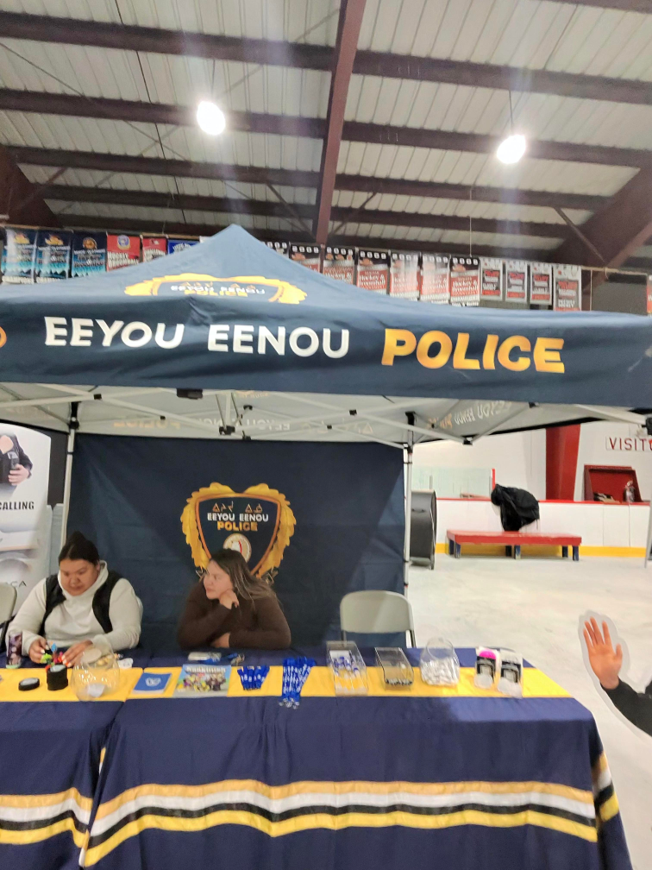
The Eeyou Eenou Police had a booth at the fair as a community-safety partner. The police service is not a program under the Cree Health Board, but safety and wellness often overlap. Police can support prevention, youth outreach, public education, and collaboration during community events.
Their participation showed that community wellness requires more than one department. Safe public spaces, respectful relationships, prevention, and trust all contribute to healthier communities. Partnerships can be especially valuable when organizations communicate clearly and work toward shared community goals while respecting their different responsibilities.
How the Fair Connects with CERRI
CERRI has a different mandate from the health-service programs at the fair. Its role is community-based research under the Cree Nation of Chisasibi. However, the topics presented at the event are relevant to research because they reflect real community priorities: family well-being, sexual health, environmental safety, tobacco prevention, healthy living, population information, and community security.
The fair demonstrated how research can be strengthened by respectful relationships. Cultural programs contribute local knowledge and values. Public-health teams contribute prevention expertise and community education. Surveillance programs contribute population-level information. Environmental-health work connects land, wildlife, food, and human health. Community-safety partners contribute practical knowledge about prevention and outreach. CERRI can help document these connections, support community questions, and communicate findings in ways that are understandable and useful.
Any research partnership must also respect consent, privacy, data governance, cultural protocols, and the authority of the community. Community-based research is strongest when people are not treated simply as subjects, but as partners who help guide the questions, methods, interpretation, and use of the results.
What I Learned
This assignment helped me practise observation, photography, note-taking, and clear communication. I learned that a wellness fair is not only a place to collect pamphlets. It is a place where community members can ask questions, meet service providers, learn about prevention, and better understand the programs available to them.
I also learned that each booth addressed a different part of wellness, but the topics were connected. Family support can affect mental and physical health. Environmental choices can affect traditional foods. Smoking prevention can reduce chronic disease. Population information can help guide programs. Police partnerships can support community safety. Seeing these connections helped me understand why collaboration matters.
Taking photographs for the blog gave me a way to document the event and share what I observed with people who could not attend. It also reminded me that workplace documentation should be accurate, respectful, and focused on the purpose of the project.


Comments