
MARINE BIOLOGY FIELD TRIP
Exploring Water, Shorelines, and Underwater Technology
Work Assignment Blog • Summer 2026

Cover photo: Rocky shoreline and open water documented during the field trip.
Prepared by Randolph Martin Based on photographs shared by a youth assistant from the marine biology trip |
Introduction
Dante asked me to prepare a blog about a marine biology field trip, and one of the youth assistants shared photographs from the trip so I could document the experience. The images show field travel by boat, open-water observation, shoreline and wetland habitats, aquatic vegetation, and the use of an underwater drone. Together, they show how environmental learning can combine technology, teamwork, and direct observation of the water and surrounding land.
I am writing this blog from the photographs and information that were shared with me. For that reason, I am focusing on what the images clearly show and not adding species names, measurements, or scientific results that were not provided. This keeps the blog accurate while still explaining why the trip was an important learning experience.
Travelling to the Field Area
The boat photographs show the team travelling across open water with equipment on board. Reaching a field area by boat allows a research team to observe places that cannot always be studied from shore. It also gives a wider view of the shoreline, water conditions, vegetation, and surrounding landscape.

Figure 1. Travelling by boat as part of the marine biology field trip.
Field travel also requires preparation and awareness. Equipment has to be organized and protected, and the team has to pay attention to changing water and weather conditions. Even before observations begin, travelling safely and working together are important parts of the field experience.
Testing the Underwater Drone
One of the most interesting parts of the trip was testing an underwater drone. In the photograph, the drone can be seen at the surface with a tether leading back toward the operator. A tethered underwater drone is a remotely operated vehicle, often called an ROV. It can be controlled from the surface and can carry a camera or other equipment below the water.

Figure 2. The underwater drone operating at the water surface while connected by a tether.
An underwater drone can help a field team look below the surface without requiring a person to enter the water. It may be used to observe underwater habitat, vegetation, bottom conditions, or other features. The photographs do not show the drone's recorded results, but they clearly show the process of deploying and testing the equipment in real field conditions.
Observing Shoreline and Wetland Habitats
The trip was not only about technology. The photographs also document the physical environment surrounding the water. Wetlands and shorelines form important transition areas between land and water. They can hold water, support plant growth, provide habitat, and influence the conditions of nearby aquatic environments.
 Figure 3. Wetland and shoreline vegetation near the study area. |  Figure 4. Additional wetland habitat documented during the trip. |
These photographs show how varied the landscape can be, from open water and exposed rock to grasses, shrubs, and low-lying wet areas. Documenting these different places creates a visual record that can support future field notes, comparisons, and environmental learning.
Looking Below the Surface
A close-up image beside the boat shows aquatic vegetation visible through the water. This is a good example of why field observation matters. Features that may look small from above can become important when studying habitat and underwater conditions. Aquatic vegetation and other submerged material can provide structure in the water and can be part of what underwater cameras are used to document.
 Figure 5. A field view from the boat during the trip. | 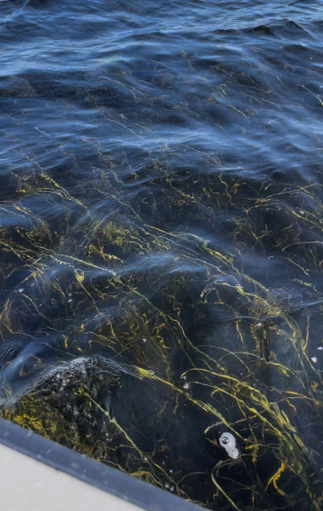 Figure 6. Aquatic vegetation visible below the water surface beside the boat. |
Learning Through Field Experience
A marine biology trip gives youth and assistants a chance to learn in a way that is different from a classroom. Instead of only reading about aquatic environments, participants can travel through the landscape, see changes in habitat, handle equipment, and observe the water directly. The underwater drone adds another layer of learning by combining environmental research with technology and problem-solving.
Youth involvement can also build confidence, responsibility, teamwork, and curiosity. Participants can learn how to prepare equipment, follow safety instructions, document observations, and ask better questions about the environment. These are skills that can support future education, research, and community-based projects.
Why Documentation Matters
The photographs from this trip are more than scenic pictures. They create a visual record of the fieldwork and make it easier to explain the trip to people who were not there. A blog can show community members what kind of equipment was tested, what environments were observed, and how youth took part in field learning.
For future trips, the blog could be expanded with the date and location of each observation, weather conditions, the purpose of each field stop, the underwater drone model, and any results recorded by the camera or other instruments. Those details would turn the photo record into an even stronger field report while keeping it easy to read.
Conclusion
This marine biology field trip brought together travel, observation, technology, and environmental learning. The photographs show open water, shorelines, wetlands, aquatic vegetation, and an underwater drone being tested in the field. They demonstrate how field research can combine modern tools with careful attention to the water and land around us.
Preparing this blog from photographs also showed me how important documentation is. Even though I was working from images shared by the youth assistant, the photos helped me organize the story of the trip and explain what could be observed. Field photography, youth participation, and underwater technology can work together to share knowledge and encourage future learning about aquatic environments.
Accuracy note: This blog is based on the photographs and trip description provided. Specific species, research measurements, and scientific results were not supplied, so they are not identified here. |


Comments